Font, Pulpit & Parish Life
For centuries, the lives of Grandborough's residents have been marked at St Peter's through baptism, worship, marriage and remembrance. Among the furnishings and features that have witnessed these moments are the font, pulpit, reading desk, windows and roof, all of which reflect the changing life of the parish over many generations.
The Font and Baptism
The font near the entrance to the church is a reminder that baptism has long been regarded as the beginning of the Christian journey. The present font was installed in 1843 at a cost of £15 and was the gift of a former vicar, the Revd Henry Bromfield, who served the parish from 1783 to 1803. His memorial can still be seen on the south wall of the chancel. Bromfield was also responsible for establishing Grandborough's Sunday School in 1788, helping to provide education for village children long before universal schooling became available.
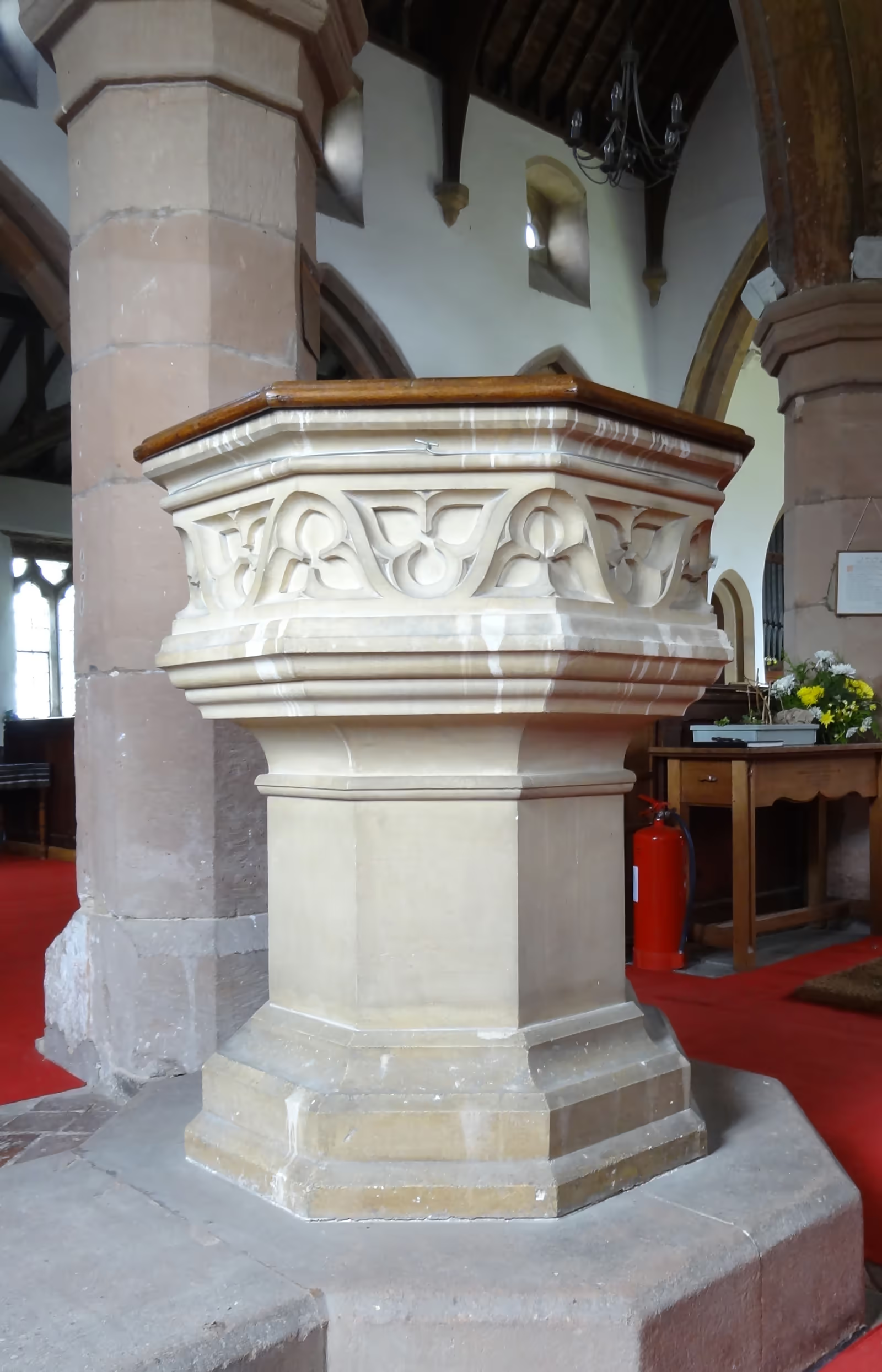
The font, installed in 1843, was the gift of the Revd Henry Bromfield, a former Vicar of Grandborough.
Pulpit and Reading Desk
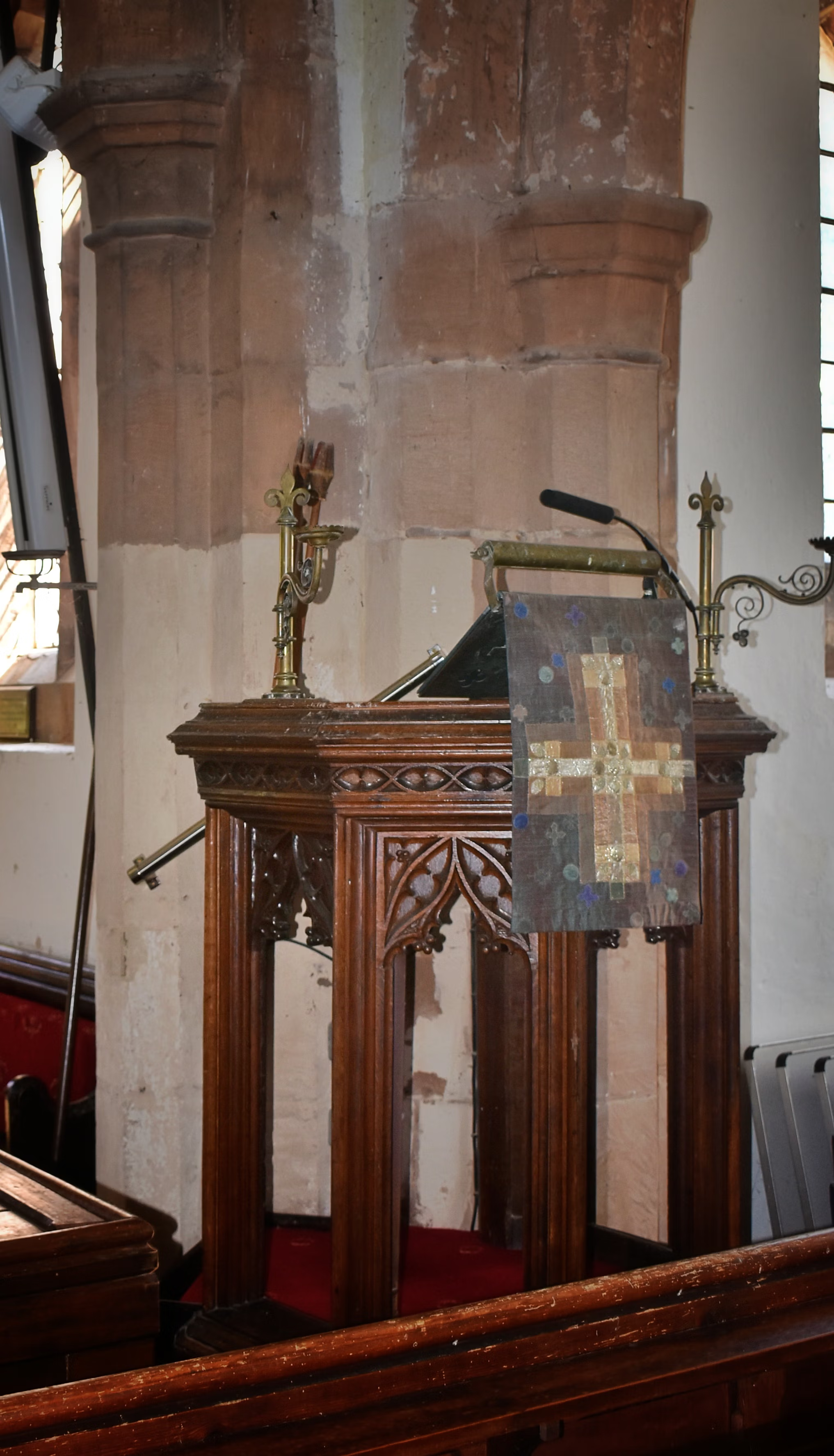
The pulpit and reading desk reflect the growing importance of preaching and scripture reading in nineteenth-century Anglican worship. The present furnishings were first used on 12 July 1846. They replaced an earlier pulpit dating from around 1790, which was removed during Victorian alterations to the church and later re-erected at St Peter's Church, Wolfhampcote, where it remains today.
An earlier pulpit removed during the Victorian alterations was later re-erected at St Peter's, Wolfhampcote.
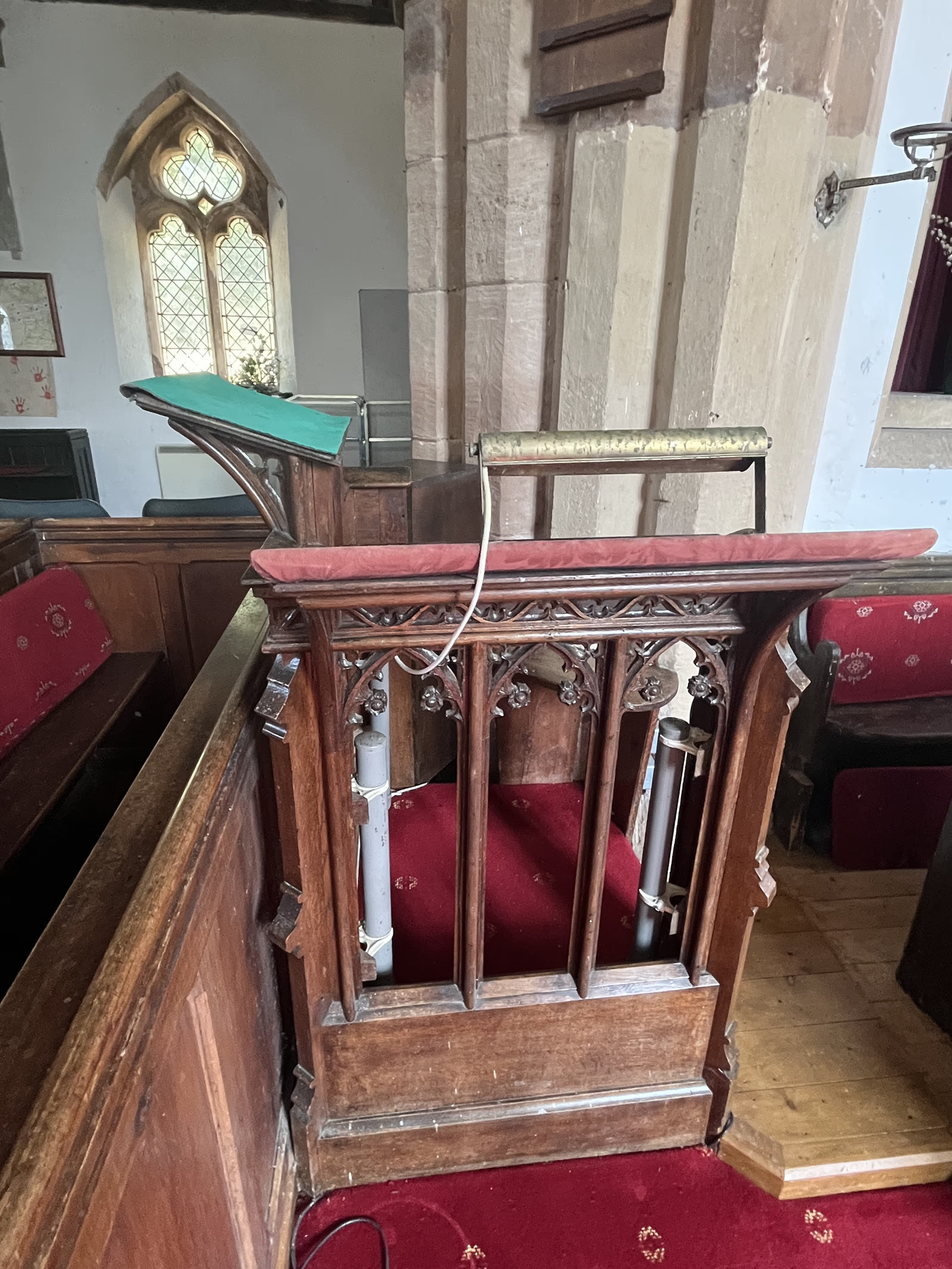
The reading desk, part of the nineteenth-century furnishings first used on 12 July 1846.
A Changing Church Interior
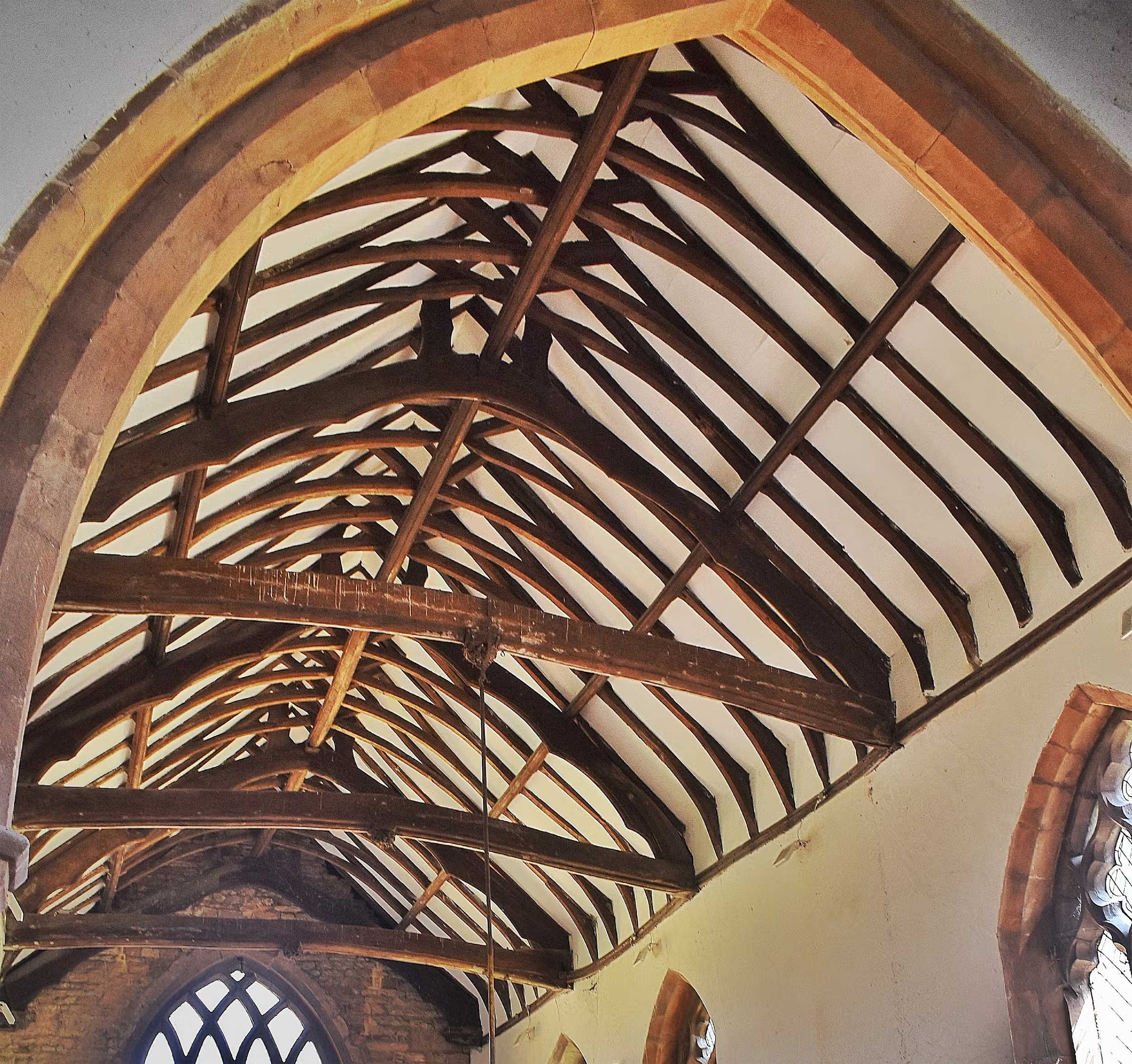
The church roof. In 1848 the flat plaster ceilings were removed, revealing the ancient oak timbers; further major alterations followed in 1863.
Much of the interior seen today owes its appearance to the extensive Victorian restoration of the mid-nineteenth century. In 1849 many of the church windows were repaired, reglazed and fitted with diamond quarry panes. The east window was donated by G. L. Johnston, while a blocked north-side window was reopened. Subsequent generations have continued this tradition of care, with further restoration of the window opposite the organ in 1989.
Visitors looking upwards will see another important legacy of Victorian restoration. Until the nineteenth century the nave and aisles had flat plaster ceilings that concealed the medieval timber roof structure. In 1848 these ceilings were removed, exposing the ancient oak timbers. Further work in 1863 replaced the flat roof with the pitched roof seen today and added the clerestory that floods the church with natural light. The aisle roofs were also rebuilt in their present form. Since then, successive generations have repaired and maintained the roof, including major works following lightning damage in 1879 and further restoration campaigns in the twentieth and twenty-first centuries.
The pews and furnishings throughout the church are also largely the product of these Victorian improvements. Together, these features tell a wider story of a church that has continually changed while remaining at the centre of parish life. For generations, people from Grandborough have gathered here for baptism, worship, marriage and remembrance, just as they continue to do today. The building and its furnishings therefore record not only the architectural history of St Peter’s, but something of the lives of the people who have used and cared for it across the centuries.