The History of St Peter's
For more than seven centuries, St Peter's Church has stood at the heart of Grandborough. While much of the building seen today dates from the fourteenth century, its story stretches back to the Norman Conquest and possibly earlier. Successive generations have altered, repaired and cared for the church, leaving behind a remarkable record of medieval craftsmanship, Victorian restoration and continuing conservation.
Origins
Grandborough is recorded in the Domesday Book of 1086 as a substantial and prosperous settlement, and it is likely that an earlier Anglo-Saxon church stood on or near the present site.
Local tradition links the first church, a late Saxon chapel, with Leofric, Earl of Mercia, and his wife Lady Godiva, who granted Grandborough and the surrounding lands to St Mary's Benedictine Priory, Coventry. The church almost certainly passed with those estates.
Before 1100, Robert de Limesey, Bishop of Coventry and Lichfield, granted Priory lands in Grandborough to his daughter Celestria and her husband Noel, probably as part of her marriage settlement. This grant was later confirmed to their son Robert, who has long been regarded as the founder of Grandborough Church.
Tradition associates the medieval canopied tomb beneath the east window of the chancel with Robert. Originally situated within the church where the organ now stands, it remains one of the oldest surviving monuments connected with the church's early history and is now situated on the exterior of the chancel's east wall.
A Medieval Building
The church building you see today dates principally from the fourteenth century. The nave, chancel, north and south aisles, and the west tower were all substantially constructed or rebuilt during this period, creating the characteristic plan which has remained largely unchanged since the late fourteenth or early fifteenth century. Although altered in later centuries, the overall medieval layout remains remarkably intact and continues to define the character of the church today.
The church was originally dedicated to St Paul — a dedication still recorded in 1730 — but by 1743 it had been rededicated to St Peter. The reasons for the change are not known.
Medieval records mention a 'Chapel of the Blessed Mary of Grandborough', which is likely to have been a Lady Chapel within the existing building, possibly occupying the south aisle where a piscina survives. The connection to St Mary's Priory, Coventry — the manorial overlord — would have made a Marian dedication entirely natural.
The Reformation and After
England's break with Rome in 1536–39 transformed the interior of churches across England, and Grandborough was no exception. The medieval rood screen separating the chancel from the nave was removed, as were chantry tombs, wall paintings and much else. The founder's tomb canopy was relocated. The piscina in the south aisle lost its basin. Evidence of these changes can still be read in the fabric of the building.
Records of churchwardens' accounts and vestry minutes, held at Warwickshire Record Office, show the rhythm of maintenance and care across the seventeenth, eighteenth and nineteenth centuries — bell ropes replaced, windows reglazed, the churchyard hedged, vermin caught and the church clock wound and oiled. These documents are an invaluable source of local social history.

Victorian Restoration
The most dramatic period of change came in the nineteenth century when major changes were made and extensive restoration works undertaken.
1848
Tower and spire restored
1849
Reredos erected
1849
Walls re-plastered, ceiling taken down exposing the oak timbers of the chancel; encaustic tile floor laid.
1862–63
Nave and aisle ceilings taken down, clerestory added.
1868
Western gallery removed, tower arch opened out.
1879
Nave roof repaired after lightning damage.
The 1862 restoration in particular was significant. The contractor, Mr Denny, re-pewed and re-seated the church, cleaned and coloured the walls and pillars of the chancel, and installed the current pointed roof over new clerestory walls. Like many Victorian church restorations, the work substantially reshaped the medieval building, reflecting contemporary ideas about how an ancient parish church should look and function.
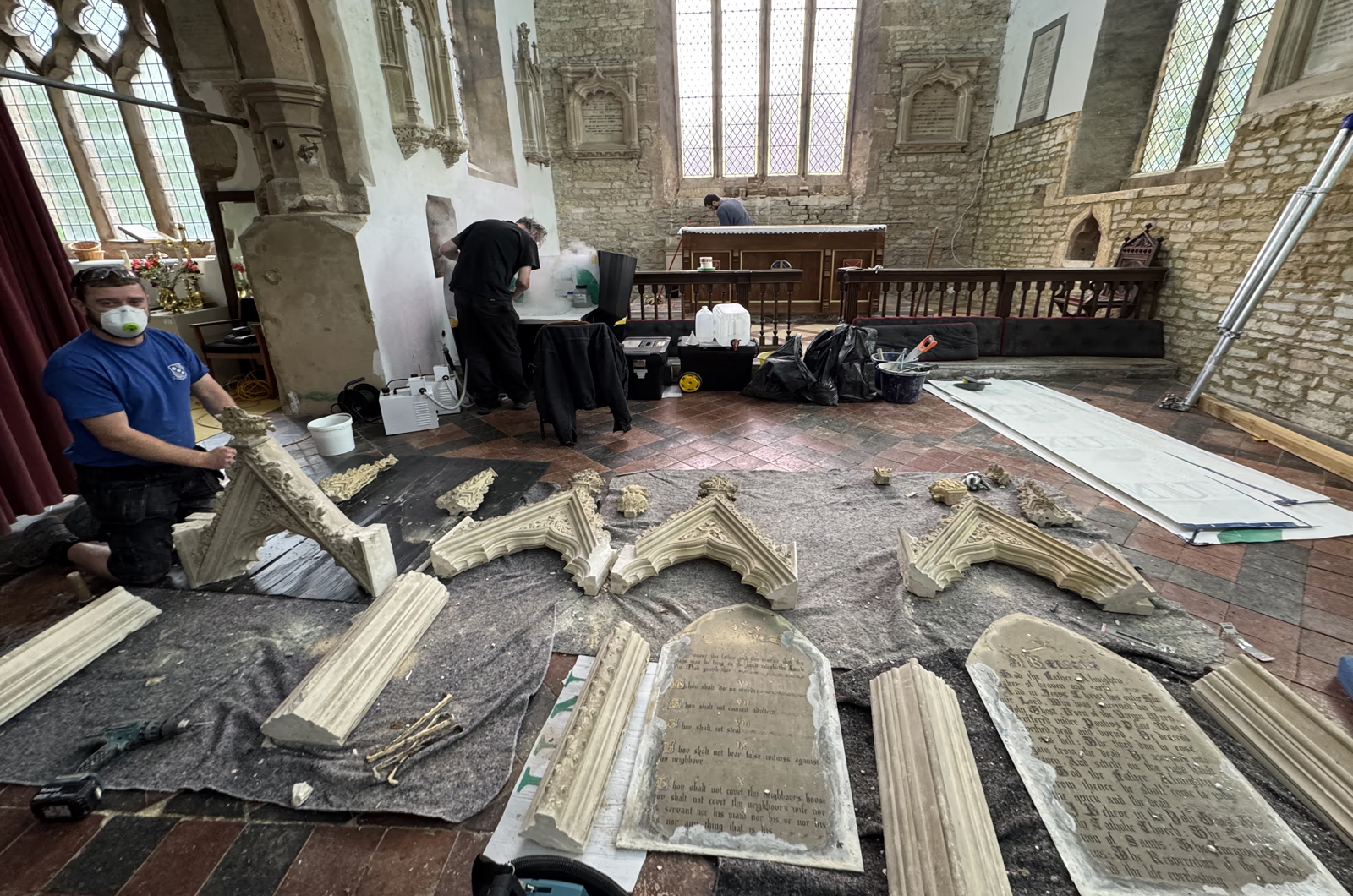
Specialist conservation of the nineteenth-century reredos, 2025.
The Story Continues
St Peter's is not simply a building from the past. It remains a living church and an important part of village life, inherited and cared for by successive generations of the people of Grandborough.
That responsibility continues today. Recent conservation and restoration work has helped protect the church and some of its most significant historic features, while the continuing care of its ancient fabric remains an important and sometimes considerable undertaking.
Just as earlier generations repaired, altered and preserved St Peter's, our task today is to care for what we have inherited so that this remarkable building can continue to serve the parish and village and be passed on to future generations.