The Church Clock
Keeping Time for Grandborough
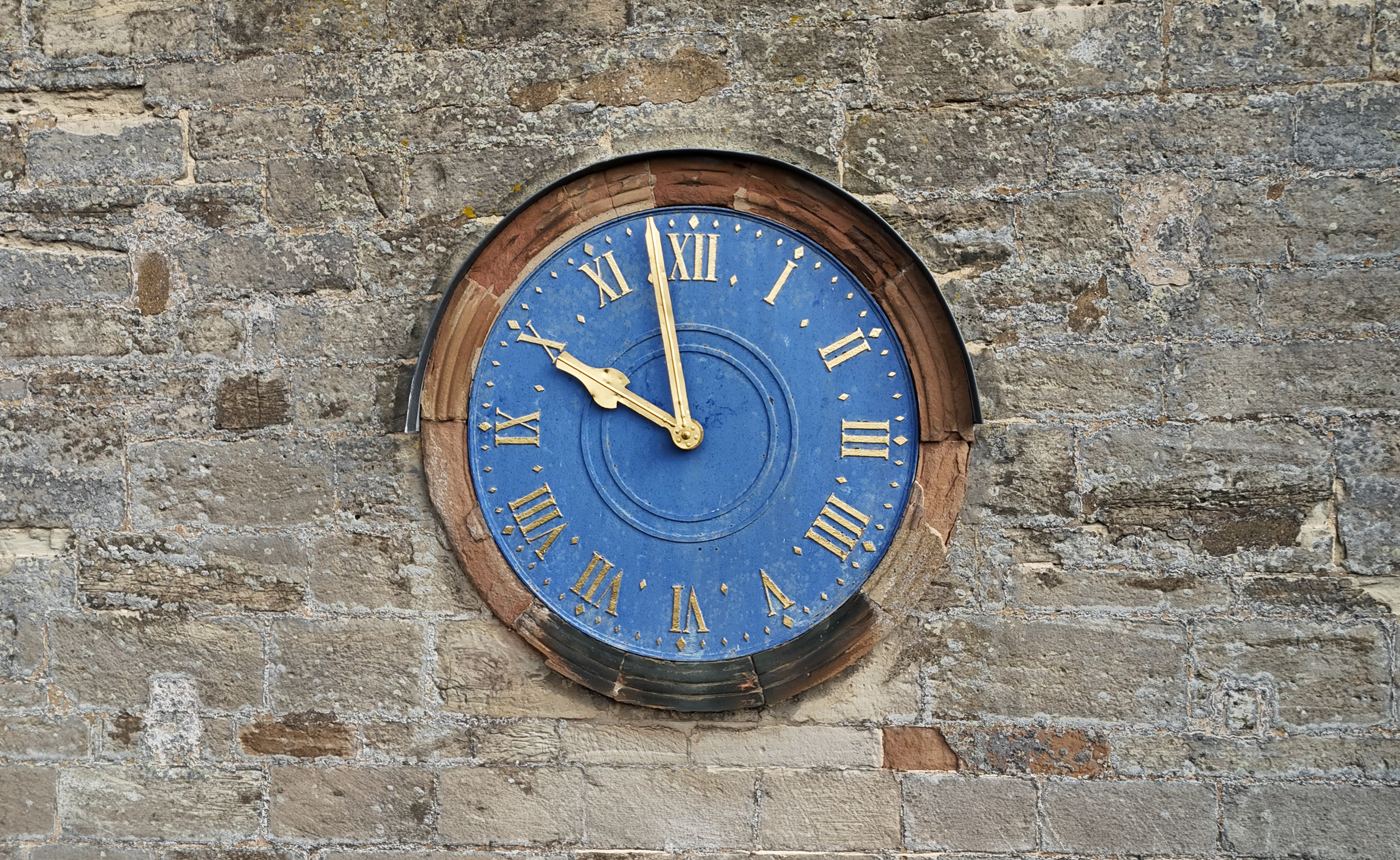
For centuries, the church clock of St Peter's has marked the passing of time for the people of Grandborough.
Long before wristwatches, radio time signals or mobile phones, the church clock was the village's public timepiece. Farmers working in the fields, children walking to school and families going about their daily lives relied on the sound of its bells and the sight of its dial to regulate the day.
Today the clock remains one of the most important historic features of St Peter's and continues a tradition of public timekeeping that has connected generations of villagers.
A Clock with a Long History
The present clock is believed to date from 1816, although there was likely a clock in the tower before that date.
The mechanism is a traditional four-post wrought-iron turret clock, a type of clock designed specifically for church towers. Built to operate continuously in often difficult conditions, it was intended to provide a reliable public service.
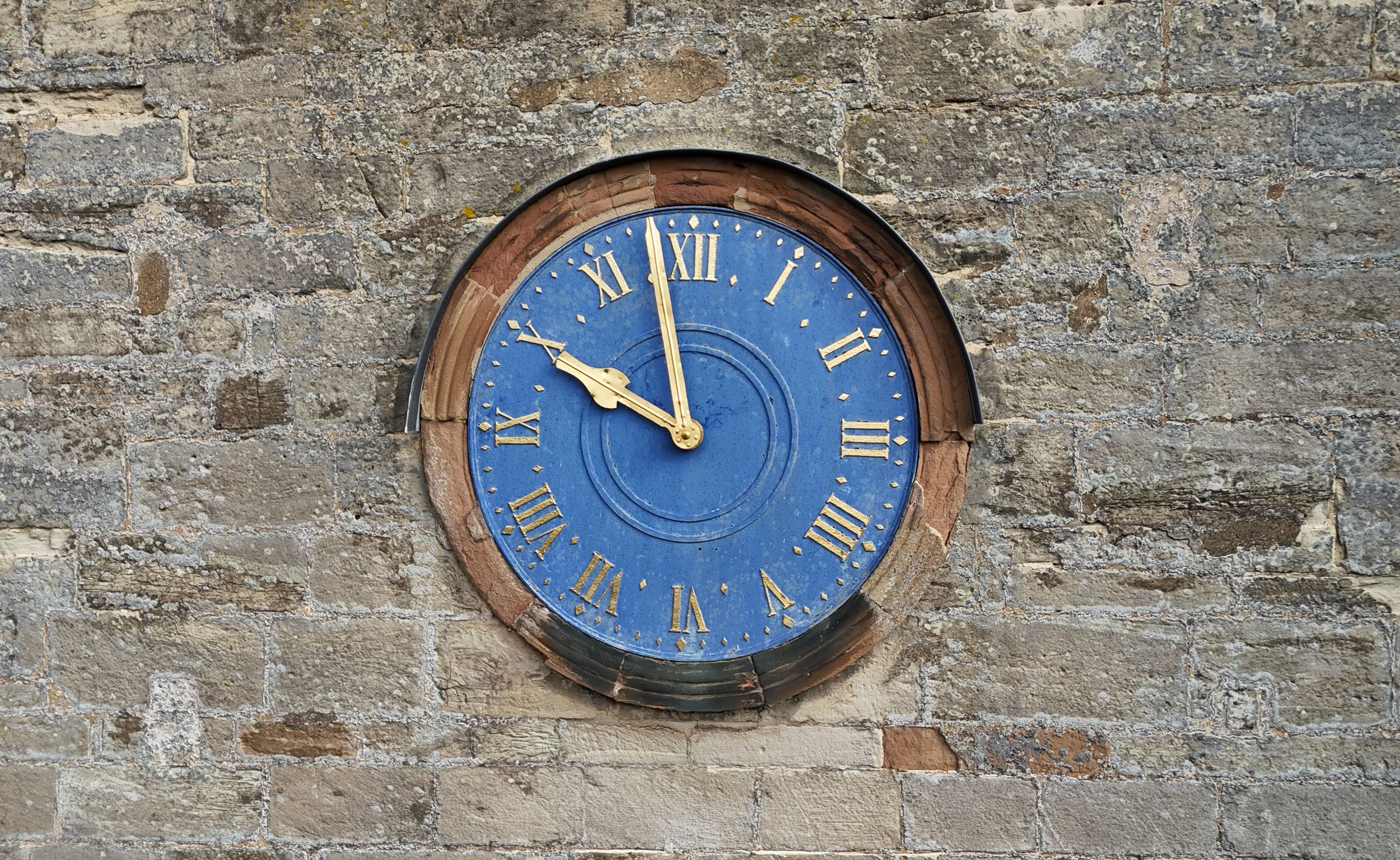
Evidence suggests that the earliest form of the clock may originally have been an hour-striking clock. The external dial and hands visible today are thought to have been added later, probably during the nineteenth century. For much of its history, villagers would therefore have known the time by listening to the bells as much as by looking at a clock face.
The mechanism also bears evidence of later alterations and improvements. Notes found in the clock room suggest that a major overhaul or conversion may have been carried out during the nineteenth century by W. F. Evans & Sons of the Soho Clock Factory, Handsworth, Birmingham, a well-known regional clockmaker.
Like many historic church clocks, the Grandborough clock is therefore not simply a product of one moment in time, but the result of generations of repair, adaptation and care.
How the Clock Works
The clock is entirely mechanical and operates through the power of gravity.
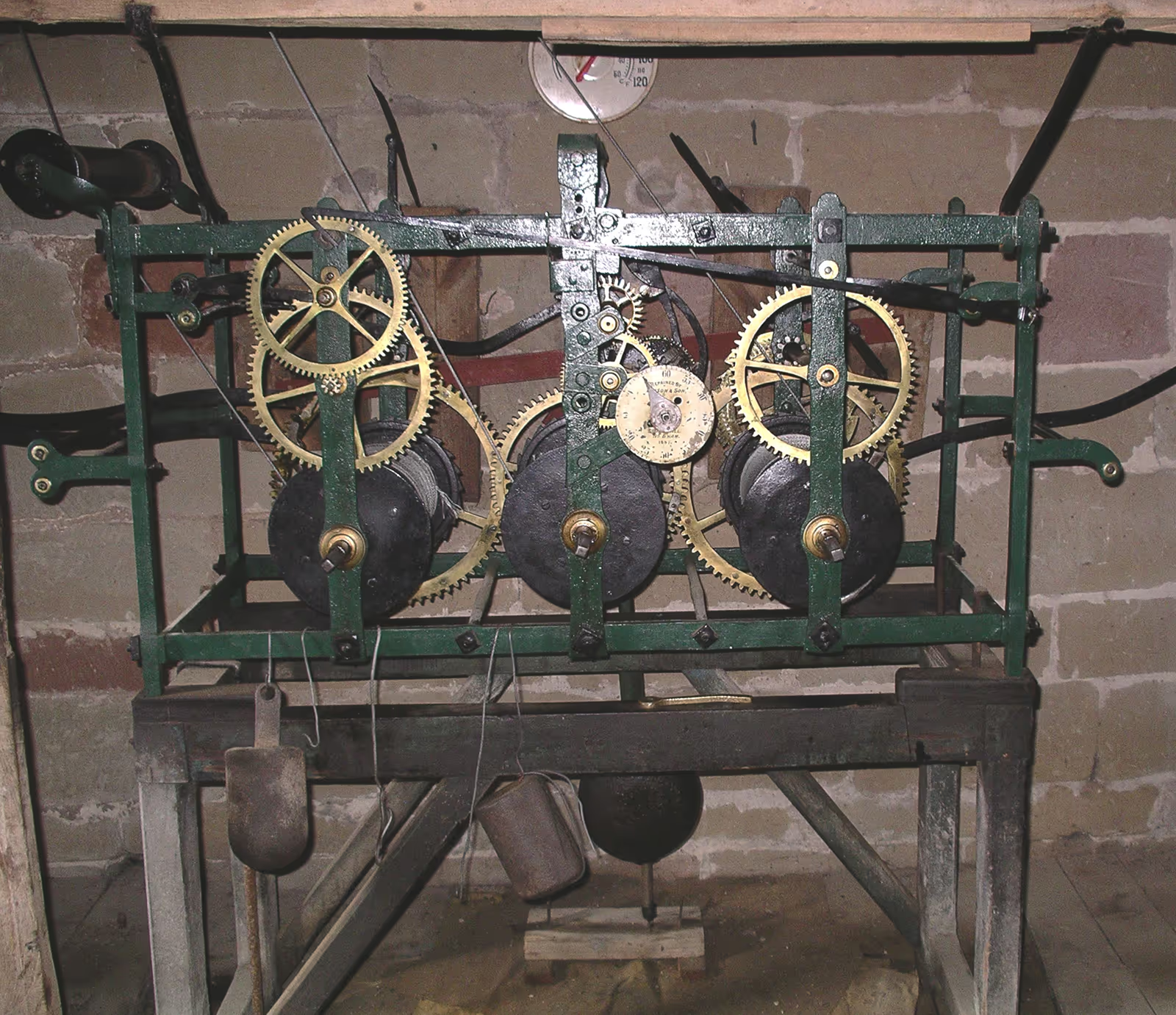
Three separate trains drive different functions of the clock:
The Going Train
The going train controls the movement of the clock hands and keeps time.
It is powered by a weight of approximately 62 pounds (28kg) and regulated by a large pendulum weighing around 64 pounds (29kg). The steady movement of the pendulum controls the release of energy through the gear train and determines the clock's accuracy.
The Striking Train
The striking train sounds the hours on the church's tenor bell, the largest bell in the tower.
Powered by a weight of approximately 140 pounds (63kg), the mechanism automatically counts and strikes the correct hour throughout the day and night.
The Quarter Chimes
The striking train sounds the hours on the church's tenor bell, the largest bell in the tower.
A third train controls the quarter chimes, sounding the familiar "ding-dong" sequence on two of the smaller bells every fifteen minutes.
Powered by a weight of approximately 140 pounds (63kg), the mechanism automatically counts and strikes the correct hour throughout the day and night.
This train is powered by a weight of approximately 160 pounds (73kg).
Winding the Clock
For most of its life the clock required regular manual winding.
The heavy weights descended through openings in the tower floor, allowing the greatest possible drop before they needed to be raised again. Historic interpretation boards record that the quarter-chime train required winding daily, the striking train every two days and the going train every three days.
For generations this task fell to churchwardens and local volunteers who climbed the tower to keep the clock running and ensure that the village continued to hear the hours marked.
Modern Improvements
The clock has continued to evolve in order to remain reliable while preserving its historic character.
In 1996, the external clock face was carefully repainted, helping to preserve one of the church's most recognisable features.
A major set of enhancements followed in 2007, when automatic winding and electronic pendulum regulation were installed at a cost of £6,915. These additions removed the need for frequent manual winding while allowing the historic mechanism itself to remain in operation. Importantly, the installation allowed the original clock to remain rather than being replaced by an electronic system.
The project helped secure the long-term future of the clock and reduced wear on the historic movement.
2025-2026 Conservation and Restoration
After more than two centuries of service, St Peter's historic clock had reached the point where significant specialist conservation was required.
Years of continuous operation had inevitably taken their toll. Specialist inspections identified wear across the mechanism, including worn bearings and moving surfaces, deterioration within the striking and quarter-chiming mechanisms, and corrosion and wear affecting the hammers and their associated linkages. The automatic winding equipment installed in 2007 was also ageing and becoming increasingly difficult to maintain. Left unaddressed, these problems risked causing further wear to the historic movement and ultimately threatened the clock's ability to remain in regular use.