The Church Bells
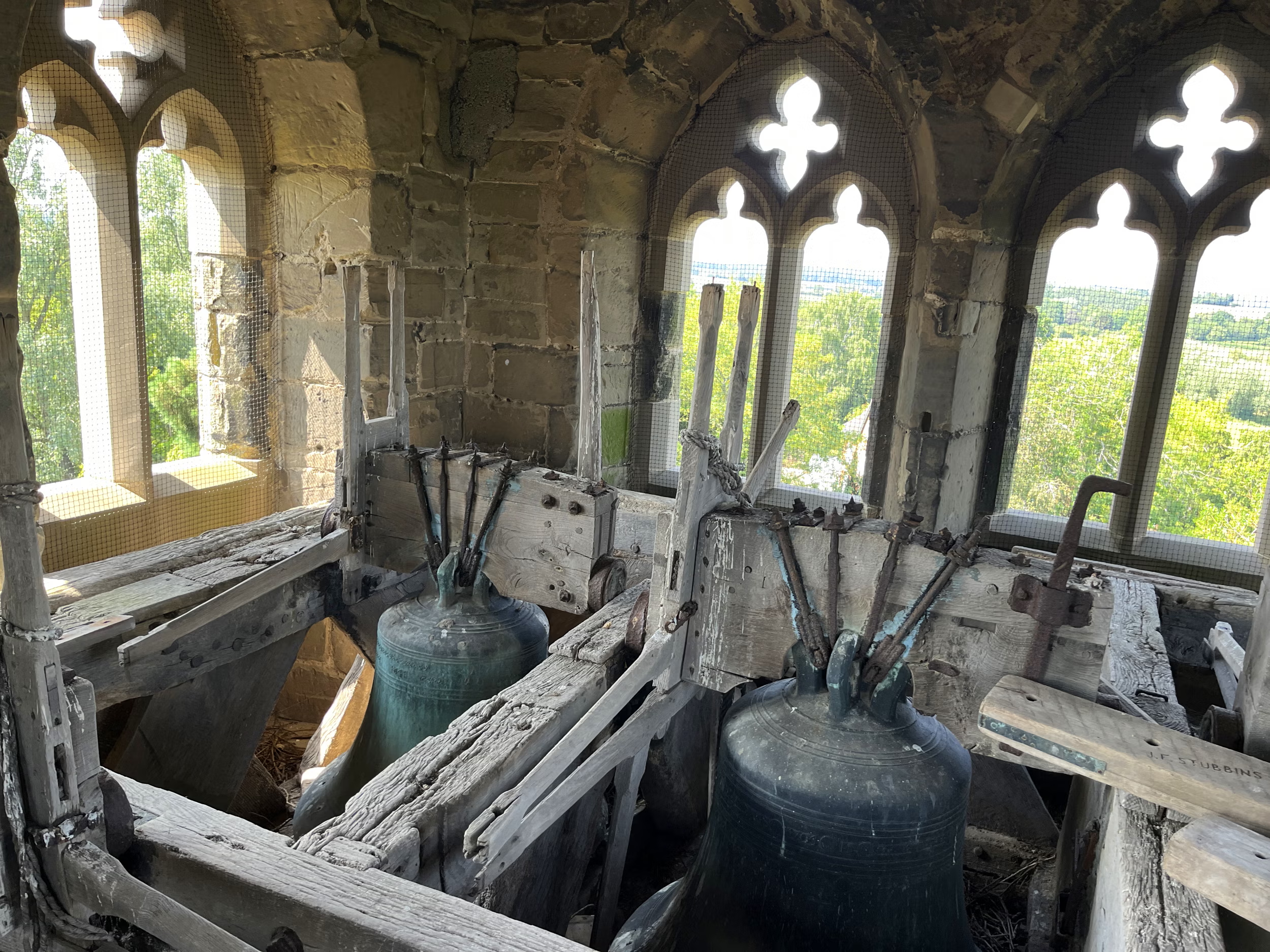
The Voice of the Village
For centuries, the bells of St Peter’s have called people together, their sound carrying across Grandborough and the surrounding countryside.
They have rung through the English Civil War, the Georgian era, two World Wars and generations of change in village life. Their inscriptions preserve the names of seventeenth-century craftsmen and parish officers, while their voices provide a remarkable living connection with the people who have gone before us.
The bells have called parishioners to worship, celebrated weddings and national events, and tolled at times of mourning and remembrance. Long before modern communications, church bells were one of the ways in which news and shared moments travelled through a community — their different patterns of ringing familiar to generations of villagers.
Today, the bells are not simply historic objects preserved in St Peter’s tower. They remain a living part of the church and village: the same bells, heard across the same landscape, that generations of Grandborough residents have heard before us.
The Ring of Five Bells
The tower contains a ring of five bells, all dating from between 1639 and 1706.
Although the tower itself was built in the late medieval period, the present bells were installed during the seventeenth and early eighteenth centuries. The bells are hung for full-circle ringing and would originally have been rung from the level below the bell chamber.
The present bells are not the first at St Peter's. Historic records show that in 1552 the church possessed four bells, indicating that at least one bell was later added or replaced to create the present ring.
The bells were restored in 1810 at a cost of £100 7s 8d, a substantial sum at the time and evidence of the importance attached to the bells by the parish.
The Bell Founders
The five bells at St Peter’s were cast by two notable Midlands bell founders: Henry Bagley and Joseph Smith.
Henry Bagley
Three of the bells were cast by Henry Bagley I of Chacombe, part of the well-known Bagley family of bell founders whose work can be found in churches throughout the Midlands.
The Bagley bells date from 1639 and 1641, making them the oldest bells in the present ring. They include the tenor, the largest of St Peter’s five bells.
Joseph Smith
The remaining two bells were cast in 1706 by Joseph Smith of Edgbaston, a noted Birmingham bell founder.
One of their inscriptions also records the names of the minister, Christopher Tille, and churchwardens Philemon Clarke and John Goode, preserving the names of people who served the parish more than three centuries ago.
Messages in the Bells
The inscriptions reveal something of the role bells played in the religious and everyday life of Grandborough.
Bell 1 carries the Latin inscription Cantate Domino Canticum Novum, meaning “Sing unto the Lord a new song.” Taken from Psalm 149, it reflects the bells’ primary purpose: calling the community together for worship and praise.
The tenor, cast in 1639, carries an equally direct message, calling people to “heare the word of God”. Long before telephones or electronic communication, church bells were an important means of gathering and informing the community.
That tradition continues today. The tenor remains connected to the church clock and sounds the hours across the village.
Translation: "Sing unto the Lord a new song."
Tenor
Bells and the Church Clock
The bells and the church clock have worked together for generations.
The church clock sounds the hours on the tenor bell and also operates the quarter chimes using two of the smaller bells. Together they form a historic system that once regulated the daily life of the village.
The sound of the bells remains one of the most distinctive features of St Peter's and can still be heard across Grandborough today.
Present Condition
Although the bells remain in the tower, they are currently not rung in the traditional manner.
Historic inspection records note that the bells have deteriorated over time and are now in poor condition. As a result they are no longer rung full-circle and are instead sounded using an Ellacombe apparatus, operated from within the tower.
This system allows individual bells to be chimed safely while preserving the historic ring.
The long-term conservation of the bells remains an important aspiration for the church.

